Seasonal Flu Shot Navigation: How to Find and Schedule a Vaccine Appointment
A flu shot is one of the simplest health errands you can run, and one of the easiest to postpone. The booking pages are confusing, the availability changes by the day, and the questions about eligibility and cost usually surface at the counter, when you are already standing there with your sleeve rolled up. None of that is difficult to fix. A bit of preparation turns a vague intention into a short, uneventful appointment. What follows is the process, in the order you will actually do it.
Start With Pharmacies That Have Stock, Not With a Search Engine
Searching "flu shot near me" tends to return a list of pharmacy locations rather than a list of pharmacies with vaccine in the fridge. Those are different things, especially in the first weeks of a season when demand outpaces deliveries. Begin with a map or a pharmacy locator service, then narrow it down.
Worth including in your first pass:
- Chain pharmacies, which often have the most reliable online booking but the longest queues.
- Independent pharmacies, which frequently have stock when the big chains run dry and can answer the phone in person.
- Supermarket and hypermarket pharmacies, useful if you are already doing a shop.
- Public health clinics and local vaccination points, sometimes the fastest route if you fall into a priority group.
Then make one phone call rather than five. Ask three questions in a single breath: do you have this season's flu vaccine in stock today, do you take walk-ins or appointments only, and is there any restriction on who you can vaccinate? A pharmacist can answer all three in under a minute. Mid-morning on a weekday is usually a calmer time to call than opening hour or the after-work rush.
Availability shifts constantly. A pharmacy that is out on Monday may be restocked by Thursday, so it is worth re-checking a location you have already ruled out.
Confirm Eligibility and Coverage Before You Book
This is the step people skip, and it is the one that causes the most friction at the counter. Two separate questions are hiding here: whether the pharmacy is allowed to vaccinate you, and whether someone else is paying for it.
Who the pharmacy can vaccinate
Rules vary by country, region, and often by the individual pharmacy. Some can vaccinate any adult who walks in; others are limited to particular age groups or to people with certain conditions, and some require a prescription first. A pharmacy's own vaccination page usually states its limits plainly, but if the wording is vague, ask directly when you call. If you are unsure whether you personally qualify — because of age, pregnancy, an underlying condition, or an allergy history — check with your doctor or the pharmacist rather than guessing.
What it will cost you
Depending on where you live, the vaccine may be free through a public programme, covered by private insurance, covered only for certain groups, or paid for out of pocket. Before booking, ask whether there is an administration fee on top of the vaccine itself, and whether you pay upfront and claim back later. If you are claiming, ask for an itemised receipt at the time — chasing one afterwards is tedious.
Coverage and eligibility rules are specific to your plan and your local health system. Confirm the details with your insurer, your pharmacist, or your doctor before you assume a vaccination will be free.
Book the Slot That Fits Your Actual Week
When a booking system asks what you need, look for a vaccination category rather than a general consultation — the two often sit behind different buttons, and the wrong one can send you into a much longer queue. Fill in your details first, then choose a time.
Two small habits save trouble later. Book a slot with a little breathing room around it, so a delayed appointment does not cascade into a missed meeting. And take a screenshot of the confirmation, including the address and any reference number, rather than trusting that the email will be easy to find on the day. If the pharmacy has a cancellation policy, read the one line about no-shows before you close the tab.
Some pharmacies reserve their first hour for walk-ins and take bookings later, and a few run separate vaccination desks with their own entrance. It is worth knowing which door to use before you arrive.
Prepare the Small Things the Day Before
Nothing on this list takes more than a few minutes, and together they remove almost every reason for a second trip.
- Put your photo ID and insurance or health card in the same pocket.
- Write down your current medications and any known allergies, including previous reactions to vaccines.
- Bring any record of past flu vaccinations if you keep one — useful, though rarely essential.
- Choose a short-sleeved top, or a loose layer you can push up easily.
- Eat and drink normally beforehand; there is no need to arrive fasting.
- Plan to arrive five to ten minutes early, not twenty.
If you have a fever or feel properly unwell on the day, reschedule. And if you are due other vaccines around the same time, mention it when you book so the pharmacist can advise on timing.
What Happens Once You Are at the Counter
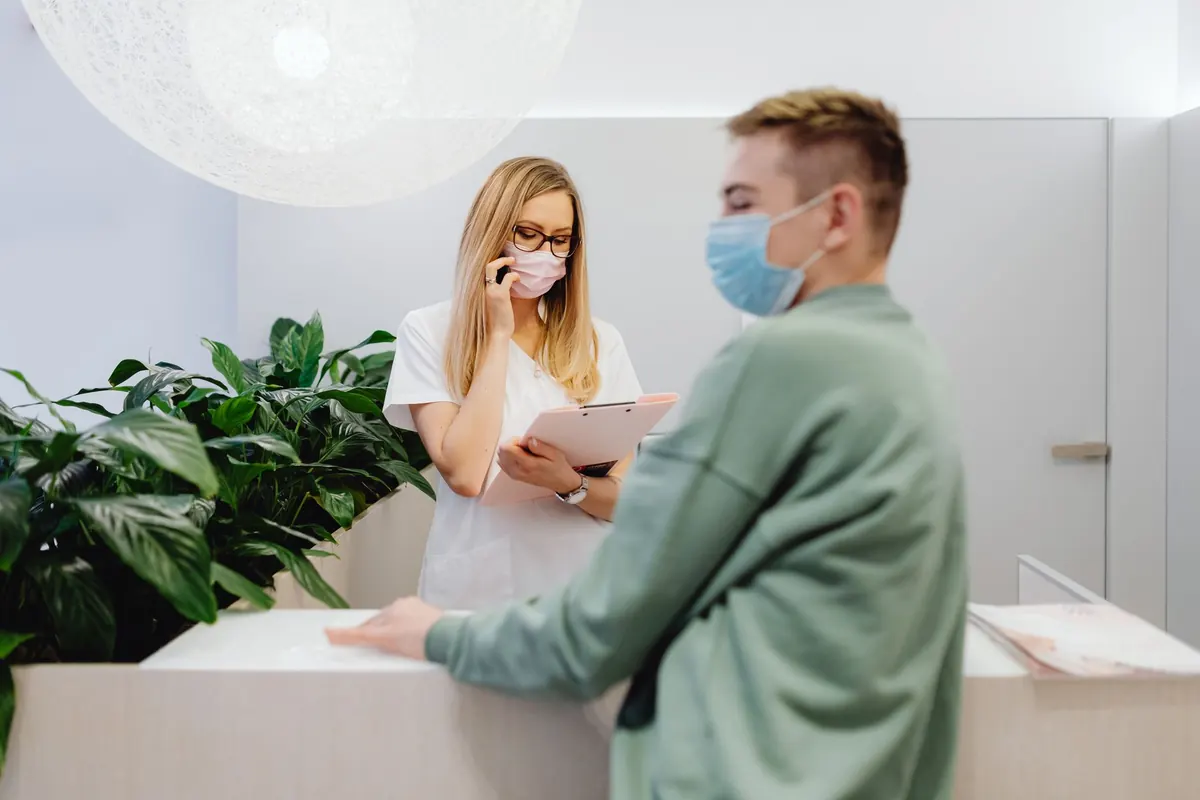
The visit is usually short. You check in, fill out a brief health questionnaire, and speak with the pharmacist, who will review your answers, confirm what is being given, and ask about allergies or previous reactions. The injection itself takes seconds. Many pharmacies then ask you to wait for around fifteen minutes afterwards for observation, so budget for that rather than sprinting to a parking meter.
Ask for the vaccine to go in your non-dominant arm if you have a preference, and ask for written confirmation of what you received, which is handy for your own records. If anything about your health history feels borderline, say so at the questionnaire stage — the pharmacist would much rather hear it before than after.
If Appointments Are Scarce
Early in a season, slots can vanish fast. Widen your search radius by a few kilometres, and try the smaller independent pharmacies that rarely appear at the top of booking platforms. Ask to be put on a cancellation list where one exists — pharmacies do get no-shows, and a call on a quiet afternoon sometimes produces a same-day slot. Check whether any local clinic offers drop-in hours, and re-check the booking page at odd times of day, since released slots tend to appear in batches rather than steadily.
Be sceptical of anything that charges a premium purely to jump a queue. Paying for a service is one thing; paying extra for "priority" access to a routine vaccine is rarely worth it.
A Short Checklist Before You Close This Tab
Pick one pharmacy from your shortlist and call it today. Ask about stock, walk-ins, and restrictions. Check what you will pay before you book, not after. Book a slot with buffer on either side. Put your card, medication list, and booking reference somewhere visible the night before. Then show up early, in a short-sleeved shirt, and let it take fifteen minutes.
That is the whole errand. The thinking is the hard part, and you have now done it.
Photo: neelam279 / Pixabay