Urgent Care vs. Retail Clinic vs. Emergency Department: A Symptom-Based Comparison
It's 7:40 on a Tuesday evening. Your daughter has a fever, a sore throat, and the flat, miserable look that usually means a strep test is in her future. The pediatrician's office closed at five. Within a fifteen-minute drive you have a pharmacy clinic, an urgent care center, and a hospital emergency department, and you are standing in the kitchen trying to guess which one won't cost you four hours of your evening.
Those three settings are built for genuinely different problems. Matching the symptom to the setting is not a bureaucratic detail — it's the difference between being seen in twenty minutes and sitting in a waiting room while more serious cases go ahead of you. Here's how the pieces fit together.
Start With What Each Place Is Built For
The names get used loosely, but the scope of each setting is fairly consistent:
- Retail clinic. Usually inside a pharmacy or grocery store. Walk-in, no appointment, staffed by a nurse practitioner or physician assistant. Narrow menu: sore throat and strep tests, flu and cold symptoms, ear infections, sinus infections, minor urinary tract infections, rashes, pink eye, vaccinations, and refills of stable prescriptions. No X-rays, no IV fluids, no stitches in most locations.
- Urgent care. A walk-in clinic set up for problems that need attention today but aren't life-threatening. Often has X-ray and lab equipment on site. Handles sprains and suspected minor fractures, cuts that need stitches, minor burns, asthma flare-ups that respond to treatment, dehydration, high fevers, and workplace injuries.
- Emergency department. Open around the clock, staffed and equipped for anything, and required by law in the United States to screen and stabilize everyone who walks in. It is the only correct choice for chest pain, stroke symptoms, severe bleeding, trouble breathing, serious head injuries, and any situation where someone's condition could collapse in the next hour.
Symptoms That Belong in the Emergency Department
This is the part where hesitation is expensive. If any of the following is happening, skip the other two options entirely: chest pain or pressure; sudden weakness or numbness on one side; slurred speech or a drooping face; difficulty breathing or blue lips; severe bleeding that won't stop with pressure; a head injury followed by confusion, vomiting, or loss of consciousness; a seizure; severe abdominal pain that makes walking or standing upright hard; a newborn under three months with a fever; ingestion of a poison or an overdose; or thoughts of harming yourself.
Two more situations deserve the emergency department even though they feel less dramatic: a fever with a stiff neck or a rash that doesn't fade when pressed, and any injury where a bone is visibly deformed or the limb is numb.
Call an ambulance instead of driving
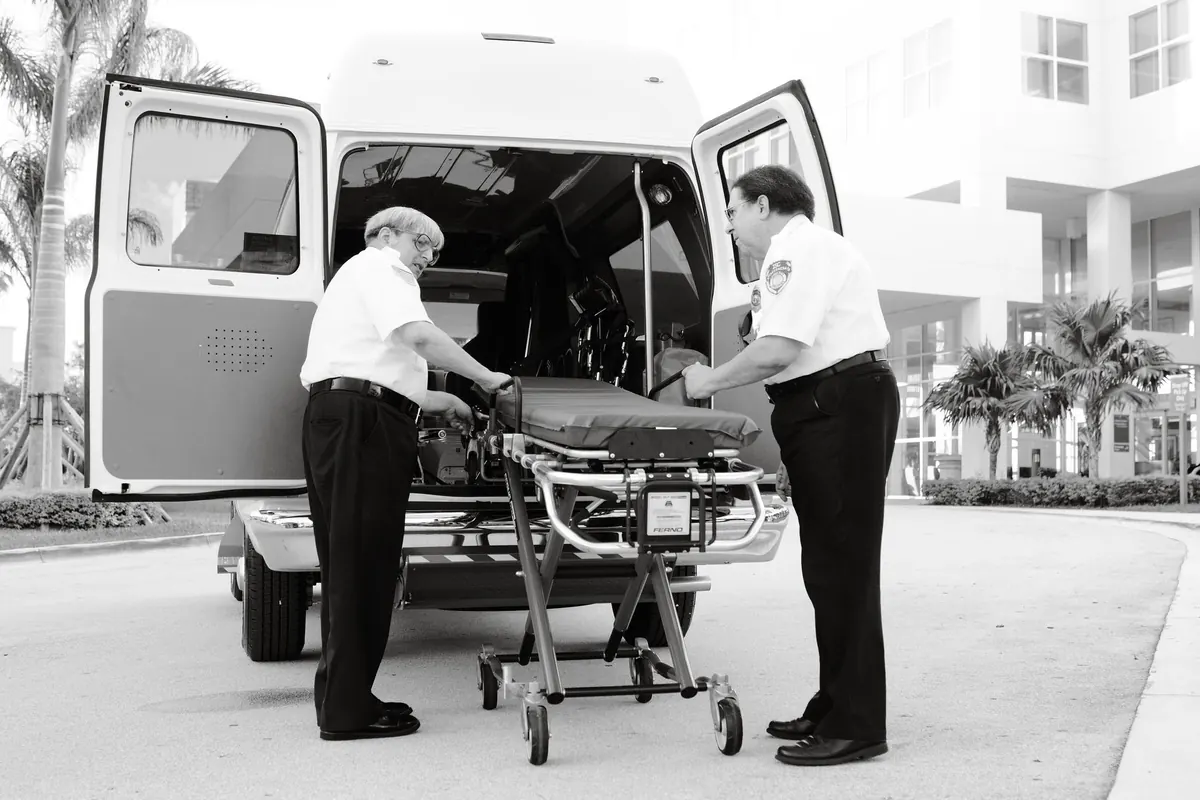
If the person is unconscious, struggling to breathe, or you cannot safely move them, call emergency services. Driving someone who is deteriorating means you are watching the road instead of watching them, and an ambulance crew can start treatment in the driveway. For everything else on the list above, driving yourself is usually reasonable.
If you are genuinely unsure whether something is an emergency, call an advice line or emergency services and describe what you see. A two-minute phone call is cheaper than a wrong guess in either direction.
What Urgent Care Handles Well
Urgent care is the workhorse of the three, and most people underuse it. A good rule of thumb: if the problem needs a test, an X-ray, or a procedure, and it started within the last few days, urgent care is probably the right door.
Think of a twisted ankle from a Saturday soccer game where you can bear some weight but it's swelling. A kitchen cut that is deep enough that the edges don't stay together. A two-year-old with a fever and pulling at one ear on a Sunday morning. A stubborn sinus infection that has been building for ten days. A UTI in an otherwise healthy adult. These are exactly the cases urgent care was designed for, and you'll typically be in and out faster than at a hospital.
What urgent care cannot do: keep you for observation, admit you, run advanced imaging like CT or MRI in most freestanding locations, or manage a condition that might need surgery. If the clinic assesses you and decides you need more, they will send you on — which is a useful outcome, not a wasted trip.
Retail Clinics: Fast, Convenient, and Narrow
The pharmacy clinic is the fastest option when your problem fits its list. It is also the most likely to turn you away, so check the scope before you go. Many locations post their services online and let you book a slot, which beats standing in line behind three people with the same idea.
These clinics shine for the small, common, well-defined problem: a sore throat you want swabbed, a flu shot, a refill of a blood pressure medication while you're traveling, a rash that has been there for a week. They are a poor fit for anything involving chest pain, abdominal pain, breathing trouble, a possible fracture, or a young child who looks unwell rather than merely uncomfortable. Most also can't handle children under a certain age, so call ahead if you're bringing a toddler.
Three Questions That Decide It in Under a Minute
- Could this be life-threatening or getting worse fast? If yes, or if you can't rule it out, go to the emergency department. Do not spend twenty minutes reading forums first.
- Does this need a test, an X-ray, or stitches? If yes, go to urgent care. A retail clinic will only redirect you.
- Is this a short, familiar, minor problem with a known answer? Sore throat, ear infection, sinus infection, refill — a retail clinic will be quickest.
If you get stuck, call the clinic you're considering and describe the symptom. Front-desk staff at urgent care and retail clinics are used to this question and will tell you honestly if they can handle it.
The Cost Question Nobody Asks Until Later
In general terms, an emergency department visit is the most expensive of the three settings and a retail clinic the least, with urgent care in between. That ordering holds up across most insurance plans, but the actual number depends on your deductible, co-pay, and whether the facility is in your plan's network.
Before you go, and where the situation allows the time, take thirty seconds to check the card in your wallet or the insurer's app for an urgent care co-pay and a network list. Ask the front desk for an estimate in writing if you're paying cash. And if you're uninsured, say so at check-in rather than after treatment — many facilities have a self-pay rate that is lower than the billed charge.
This is general guidance, not billing or medical advice. For anything involving a chronic condition, an ongoing symptom, or a large potential cost, speak with a clinician or your insurer directly.
A Short Plan Worth Making Before You Need It
Spend ten minutes this week while nobody is sick. Save the address and hours of the nearest urgent care and the nearest retail clinic in your phone. Confirm which hospital your insurance prefers. Write down the two or three medications each family member takes and any allergies, and keep it where anyone can find it.
Then decide in advance what your household's threshold is: what symptom would send you straight to the emergency department without discussion. Having that settled means the decision isn't being made at 7:40 on a Tuesday evening with a feverish child on your hip. You'll just get in the car and go to the right place.
Photo: Mikhail Nilov / Pexels